
The Nature and Blessings of Amami-Oshima Part 2: Brown-Sugar Shochu and Amami Cuisine
Print 
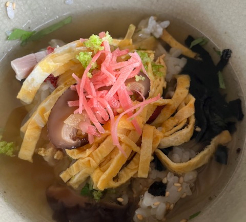
Tasting the blessings of nature (Shimameshiya Kano)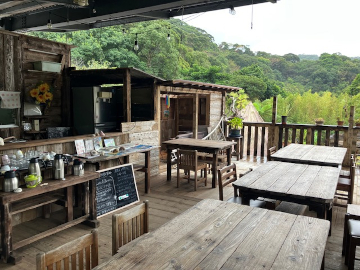 For lunch I had traditional local food at the Shimameshiya Kano restaurant, which was recommended by Mr. Sato. Actually, the meat used in the local rice food differs in the northern and southern parts of the island. While the south, influenced by Okinawa, uses pork, the north uses chicken, which, it is said, was served to officials of the Satsuma clan in the Edo period (1603–1868). In the city of Amami in the middle of Amami-Oshima you can see many restaurant signboards advertising keihan (chicken rice), and it is this chicken rice that is sold at souvenir shops as well. Shimameshiya Kano is located in the town of Setouchi-cho in the southern part of the island, so the main lunch set there is pork rice (which at the Kano restaurant is called tonhan).
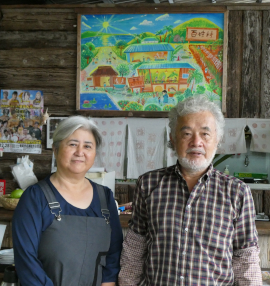
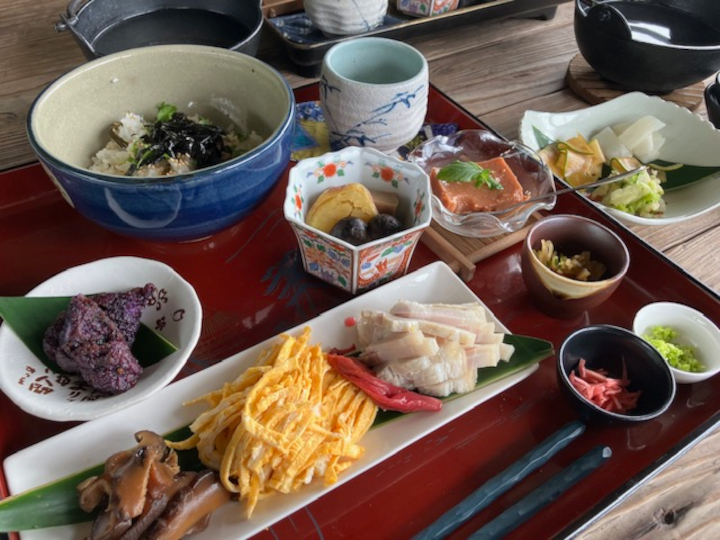
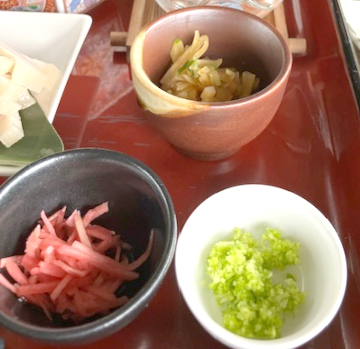 The three small dishes on the right are condiments. The pinky condiment is local ginger, the orange one with a green line is thin-sliced pickled papaya, and the green one is finely chopped lemon skin. Everything here has been cooked by Junko using ingredients grown by Tatsuro.
The dish at the very top is a bowl of rice cooked in a broth, which is eaten with toppings of accompanying dishes, condiments, and so on. First you taste all the accompanying dishes, then you eat them on rice, and finally you pour on the broth in the small pot shown partially in the far right of the photo and eat it just like ochazuke (rice with tea poured on it). Everything has a gentle flavor, not only the naturally grown vegetables, of course, but also the desalted pork and the broth poured over the pork rice. The flavor of the broth is something like adding pork extract to the clear soup used for ozoni (traditional Japanese rice cake soup eaten on New Year’s day) in Tokyo. It was, I thought, the flavor of Amami-Oshima. I had never tasted anything like it before.
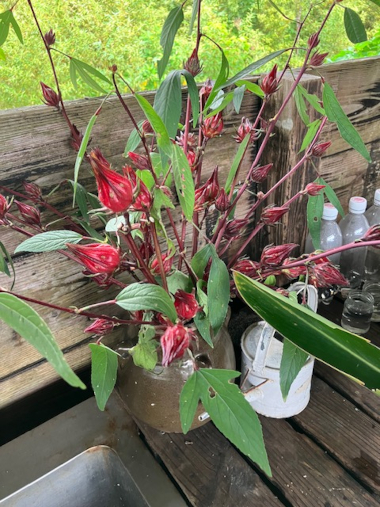
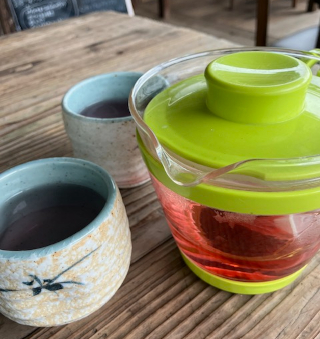
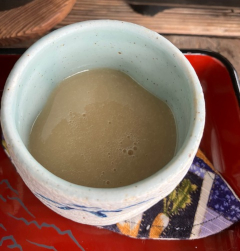 There was another unfamiliar drink, called miki, placed alongside the bowl of rice. Although the ingredients and production methods vary in the bow-shaped string of islands including Okinawa, Miyako, and the Yaeyama isles, this is a fermented drink offered to the gods at Shinto ceremonies and festivals. The name is said to derive from the Japanese word for sacred wine (miki). The drink that I had was made from sweet potato and rice with brown sugar added. Despite the fact that the drink is vegetarian, it includes, like yoghurt, much lactic acid bacteria. So even people who have dairy product allergies, or people who want to avoid animal-derived products, can drink it as a lactic-acid beverage. It contains no alcohol.
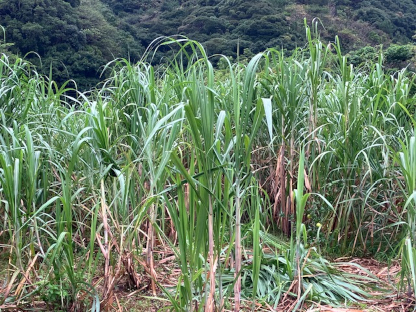
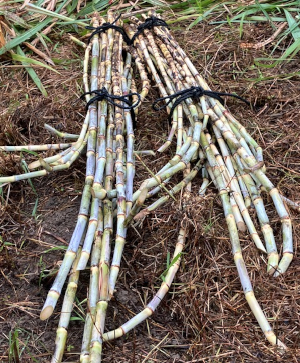
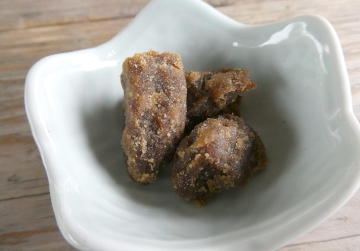
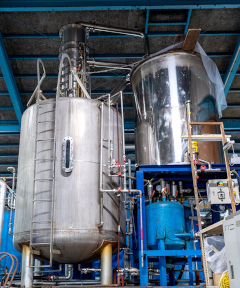
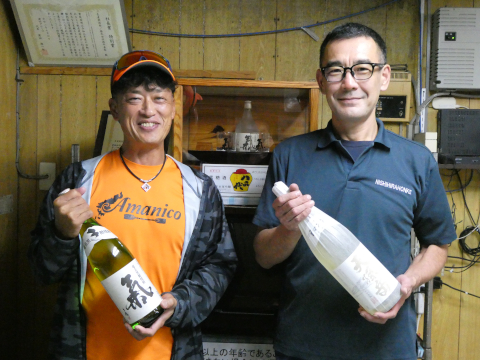
Brown-sugar shochu (Nishihira Honke)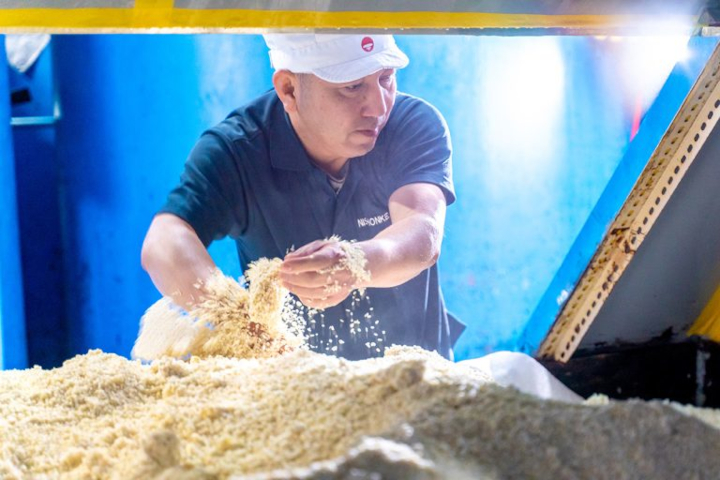 On the afternoon of that day I visited the Nishihira Honke distillery, for which Mr. Sato works as a brown-sugar shochu ambassador. Since November is not the time of year for making shochu, I was not able to actually see the process. But while looking at the equipment standing quietly inside the postseason distillery, I learned about the process.
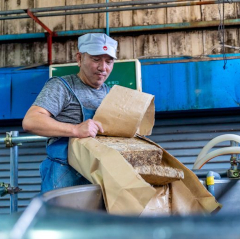
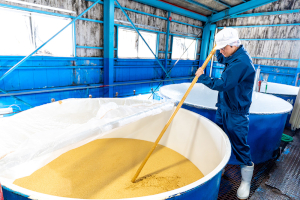
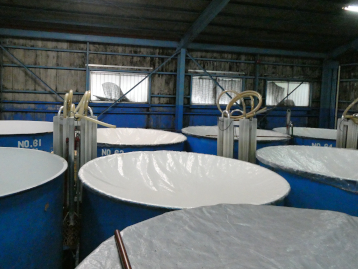
(The photos were taken during the shochu-brewing season; courtesy of Nishihira Honke.)
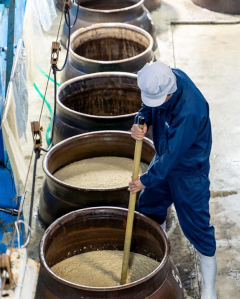 The first stage of the process involves applying kojikin mold to rice and, after leaving it for about two days, adding yeast and water to make the primary mash. Having visited Japanese sake breweries several times, I was surprised that the process is the same as that for sake. In alcoholic drinks, yeast converts the sugar into alcohol. So why, I thought, is the brown sugar not just turned into alcohol at that stage? Mr. Tomofumi Nakamura of the Nishihira Honke’s Production Section replied to my simple query with a smile, saying “Then that would be rum, wouldn’t it?”
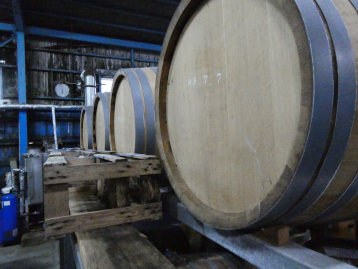
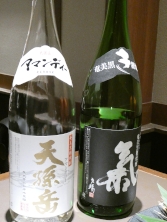
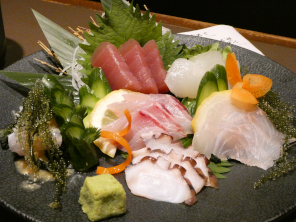
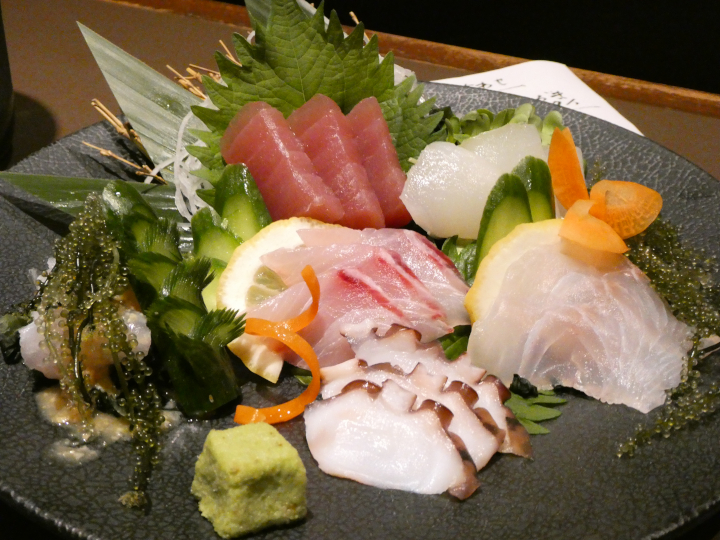
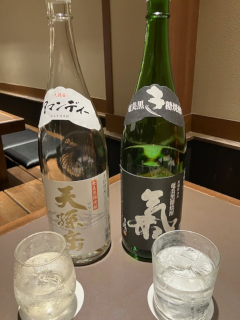 As well, of course, as the products of the Nishihira Honke distillery that I had visited, this izakaya had a wide choice of brown-sugar shochu; everything you could think of, really. And there was such a great selection of local food typical of Amami, I didn’t know which to choose. Anyway, to begin with, I ordered Nishihira Honke’s Ki and Amandi brown-sugar shochu, because I wanted to compare them and taste the difference. The Ki (brewed with black kojikin mold) was very easy to drink. While being really full-bodied, it had a refined aroma and slight sweetness. The Amandi, which had been stored in an oak barrel, had a deep richness and strong sense of aging. Maybe it would be good to drink leisurely on the rocks. Since both types would go down well with local fish sashimi, my mouth began to water.
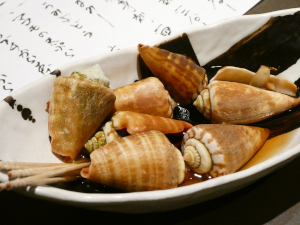 What next? As I was wondering what to order, a restaurant staff recommended tobin-niya boiled in salty water. Tobin-niya is strawberry conch (the Japanese name is magakigai)). Apparently the suffix –niya means shellfish in the local dialect. The strawberry conch hops around the coral reef sea floor with its claws, so hence the prefix tobin (from the Japanese word for hopping around, tobu). So tobin-niya literally means “hopping shellfish.” There was only a little flesh in the shell, which I pulled out using a toothpick. But when I ate it, the taste of coral reef spread inside my mouth. It was so delicious, my toothpick hand just wouldn’t stop going for more. Without a second thought, I ordered another helping.
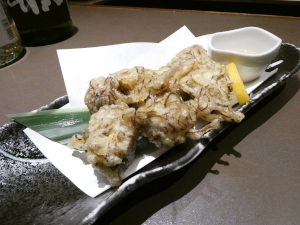
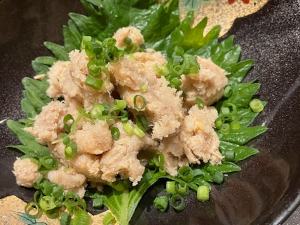
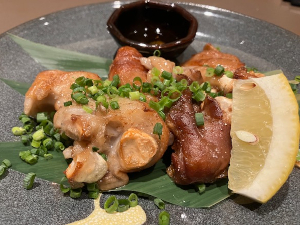 The last dish in the “pork course” that I had begun earlier that day at Shimameshiya Kano was simmered pig’s feet. Usually I have an aversion to pig’s feet, but this was so good, the taste was firmly etched in my mind. The people of Amami certainly know how to eat pork well.
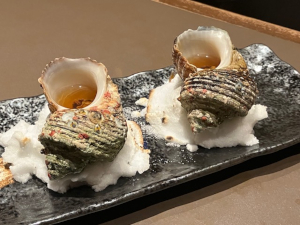 Finally, the restaurant staff who had explained all the dishes that I had eaten that evening in detail lit up a grill on the table to cook local turban shell meat in its own shell. The taste of the shell meat was excellent, of course, but it was the appearance of the turban shell that was unforgettable. Unlike the turban shells that I had seen before, these shells had no spines. One of the delights of eating in an unfamiliar place is not only the taste but also the unique appearance of things.